My first real recollection of the existence of a country called Japan was at Roman Road Primary (Junior) school in East Ham, London when we learned about ladies wearing kimonos and rice growing in paddy fields. But, it was also to feature in our music lessons in a BBC TV educational programme called Making Music in the summer term of 1967. Produced by John Hosier for 10-11 year-olds, with words by Ian Serrailier and music by Malcolm Arnold, ‘The Turtle Drum’ was a “story of the fisher-boy, a sort of Japanese Rip Van Winkle,.. one of the most popular folk-tales of Japan”.
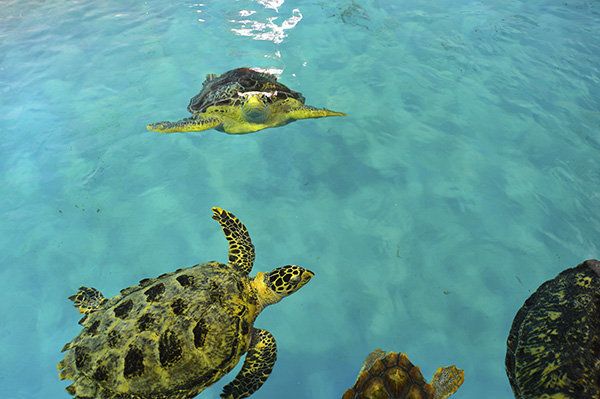
Like all folk-tales, there are various versions, but in the Turtle Drum, Kaisoo saves the life of a turtle and returns it to the sea. As a reward, the turtle who amazingly can speak offers him a ride on her back to the ryukyu or underwater Palace of the Dragon King. Surrounded by fish of all shapes and colours, he was taken to an Inner apartment to meet Princess Oto who revealed herself to be the human form of the turtle whom he rescued. In the land of everlasting summer and eternal youth, they quickly became betrothed and were married in an elaborate ceremony. But all was not rosy in this underwater paradise and after only three months the young man became homesick missing his family and friends in the real world. Broken-hearted, the Princess reluctantly agreed to his request to go home, especially when he said that he’d just go for a day-return trip and would hasten back once he had reassured his family he was safe and well. As a sayanora (farewell) gift, Princess Oto gave him a tamate bako (Box of the jewel-hand) or Pandora’s box according to Greek mythology, telling him to keep it as a reminder of their love. But never to open it.
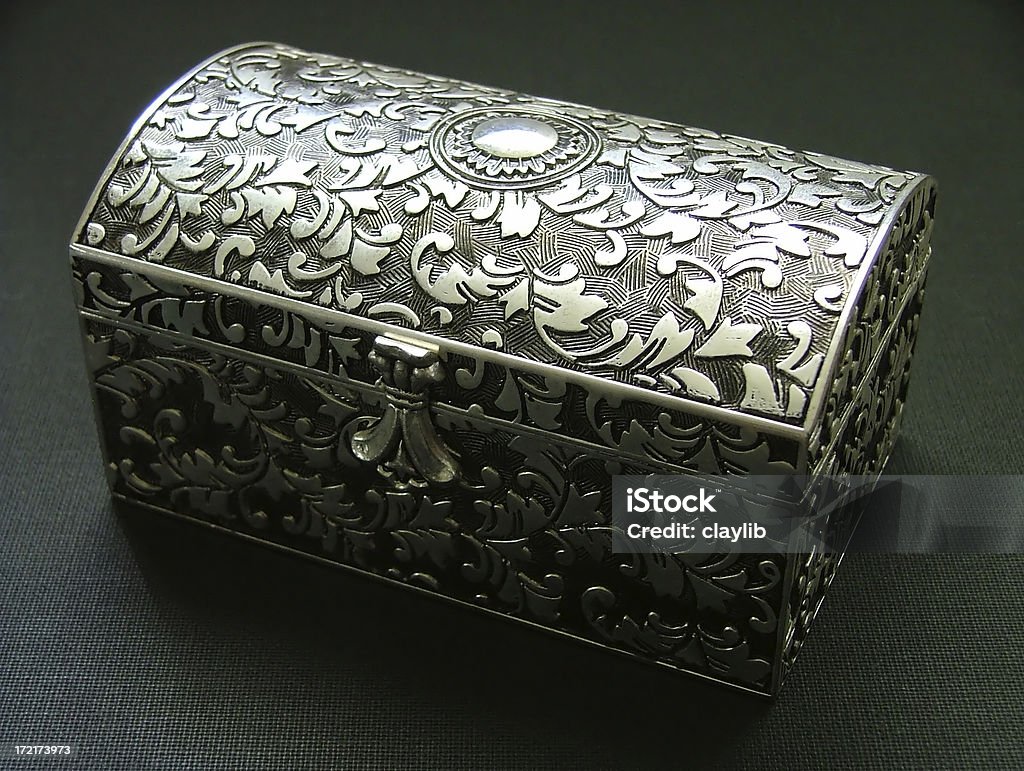
Taking Turtle Transport back to dry land he found that all was not all as he had left it three months previously. Questioning the locals he discovered that he was in fact the subject of legend as the young fisher-boy who went missing, presumed drowned three hundred years previously. Naturally, overcome by grief himself for the idyllic underwater life with his beautiful bride, he sought in vain for a means to return until he remembered the box given to him on his departure. Hoping that it might contain his return ‘ticket’ he forgot Princess Oto’s Instructions not to open it – a white cloud emerged which consumed Kaisoo leaving him as a wizened old man who gradually disintegrated Into a pile of ash which was blown out to sea in the direction from whence he came.
At school we all had instruments (many home made) to play, or parts to read in this exotic musical tale which opened our minds to a different world and lands far away; my lines were “Past Puff (my childhood nickname) the swaggering angel fish” as the boy hero made his journeys on the back of the turtle to and from the sea kingdom.
Those words stuck with me, and came flooding back 12 years later, when I was setting out on my career as a junior diplomat in Tokyo and learning Japanese. The first text I was given to read and translate by my Japanese teacher was ”The Story of Taro Urashima the Fisher-lad”, the folk-tale on which the Turtle Drum was based. So began my long association with the Land of the Rising Sun, if not the Palace of the Dragon King although the connections would continue.
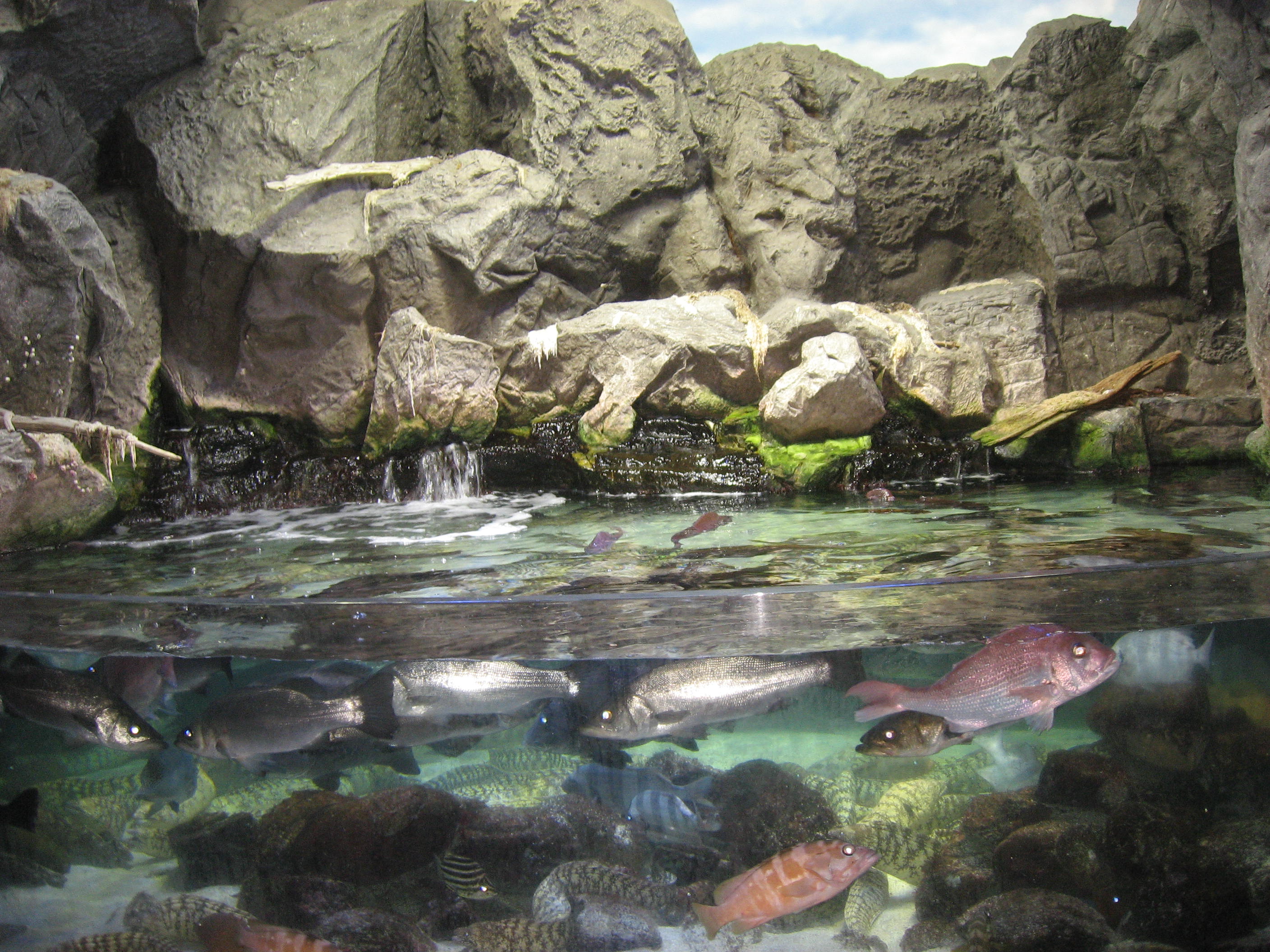
Twenty-one years later (2020) during my second overseas posting to Japan and accompanied by my own Japanese wife to whom I’d been married for ten years, we visited the Ise Peninsula, often known as the spiritual heart of Japan. After the obligatory trips to the shrines, we then stayed in Toba on the coast where we went to our own underwater kingdom of a large sea-world aquarium which, according to the publicity material, contains the largest number of species in Japan covering three floors of tanks and pools and where I’m sure I saw ‘Puff, the swaggering angel fish.
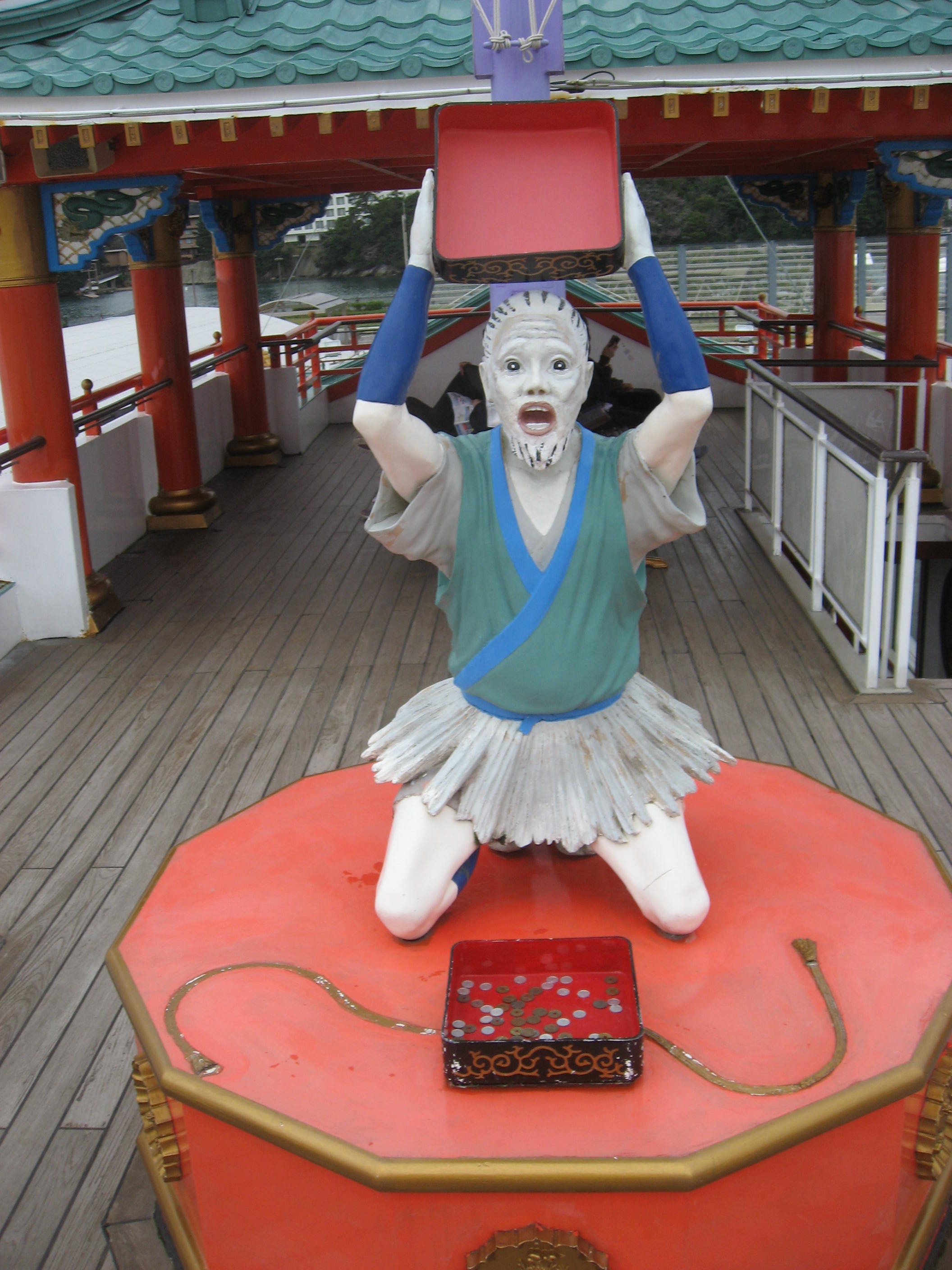
This could well have been the case as we then took a cruise around some of the offshore islands. In Japan many island and lake cruises take place aboard ships constructed around themes such as pirate boats and on this occasion a Spanish galleon, the figurehead of which was the fisher boy, Taro Urashima astride a large turtle. On board and inside were other models and pictures of his underwater adventures, and eventual demise.


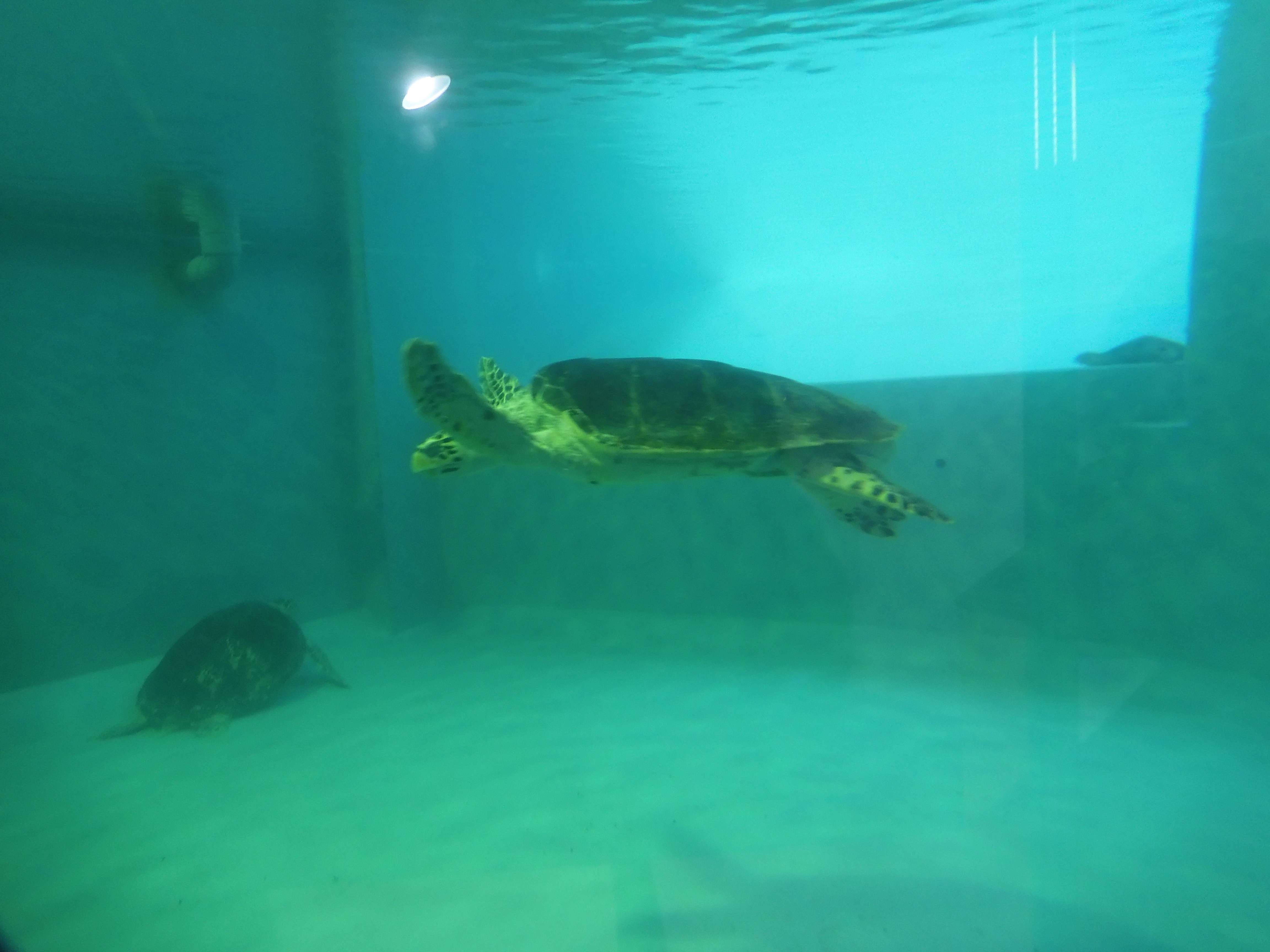
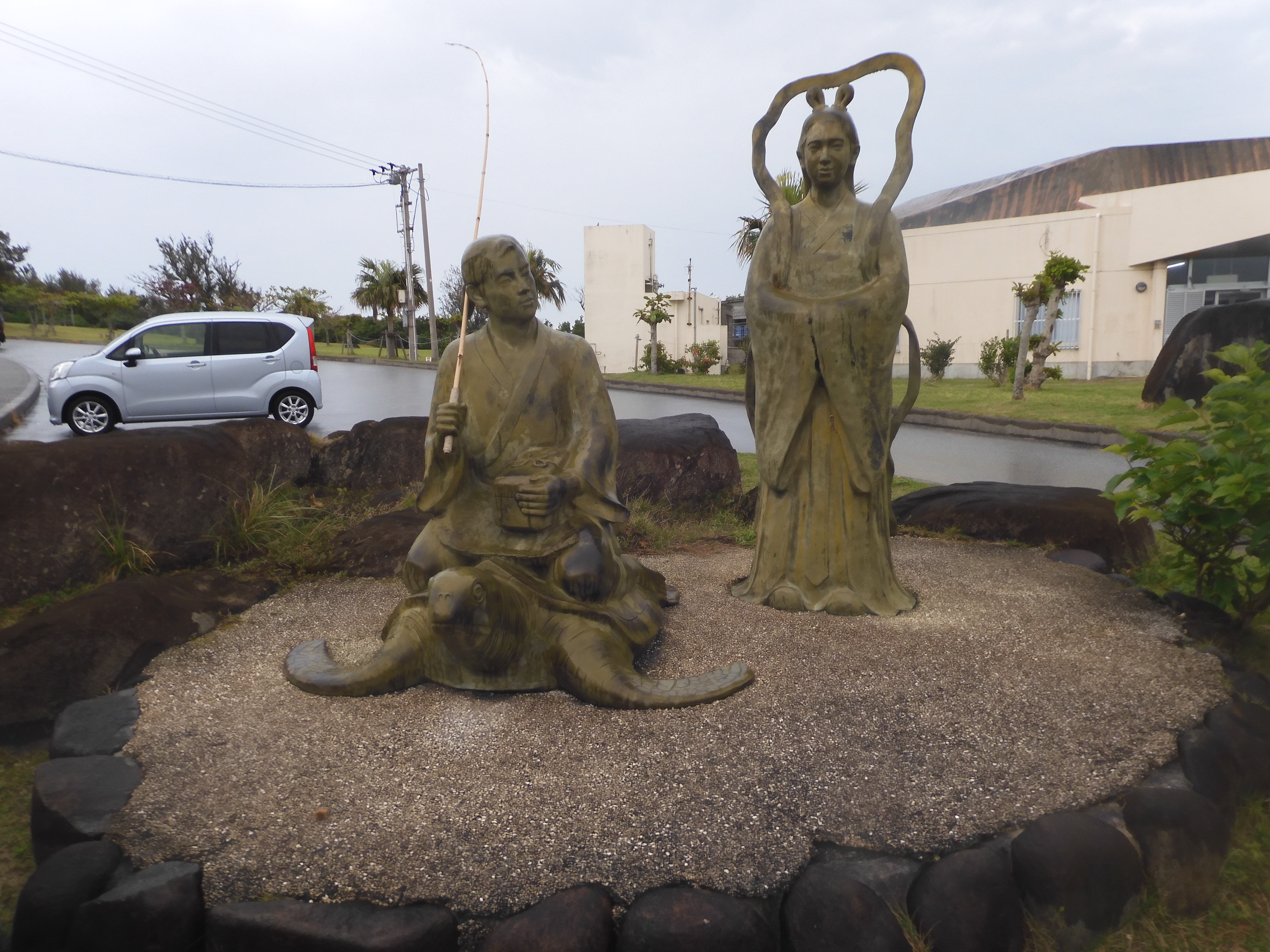
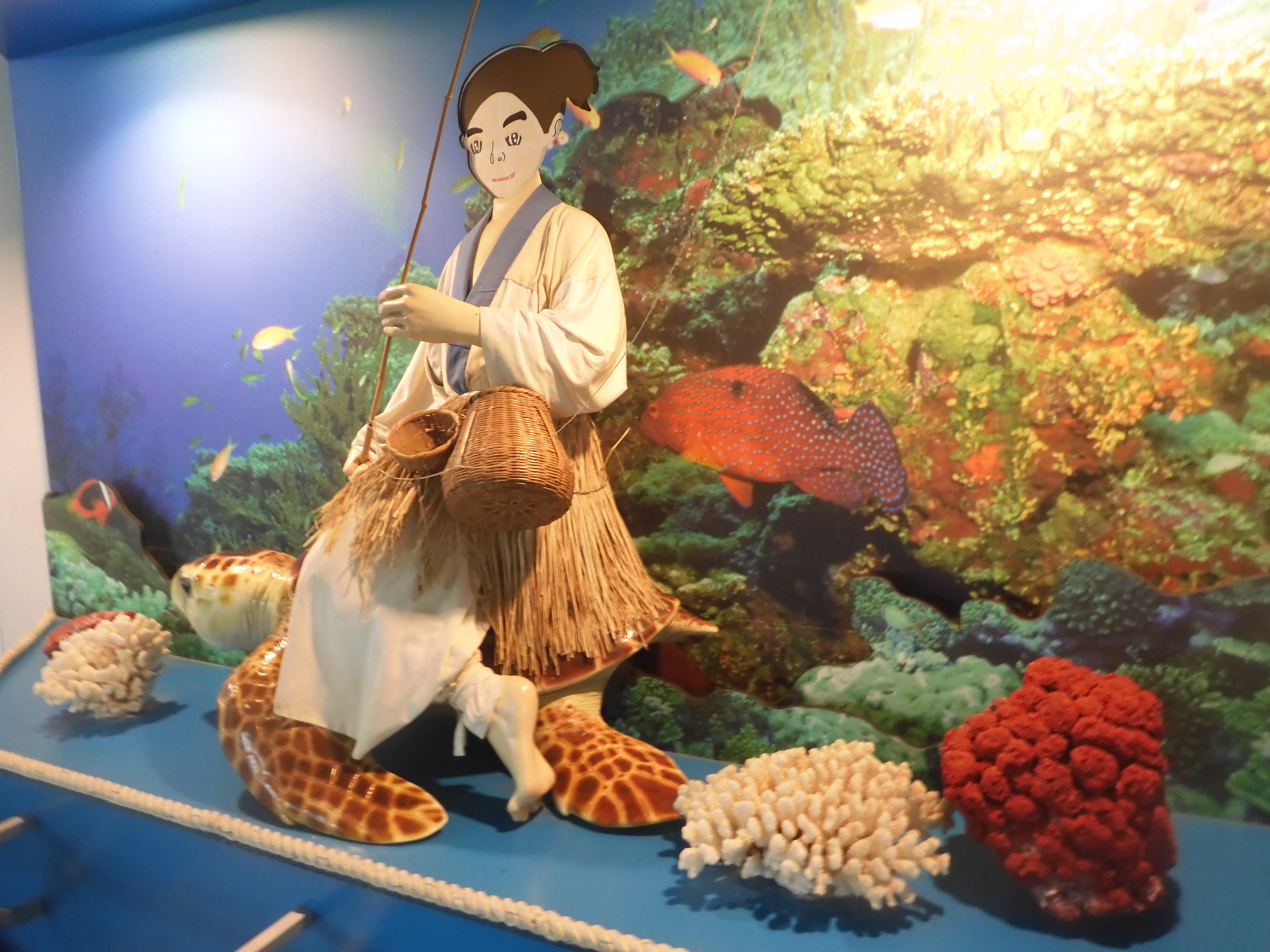
Like all folk-tales and myths, there are various versions and theories as to the origin. In this case both China and Korea have at times laid claim as have differing regions of Japan including Okinawa where Ryūgū” (Dragon Palace) and Ryūkyū (Okinawa) are near homophones. So, it’s not surprising that earlier this year we encountered Taro and his turtle on a visit to the Okinawan Island of Kumejima. The Turtle Museum is dedicated to the preservation and conservation of these threatened creatures and serve as a reminder that, if we humans don’t stop polluting the sea, their future existence is threatened. We may be guilty, but Taro Urashima was a real friend and his memory is embodied in a statue outside the museum as well as a display in the reception area.
So, I have ridden on the back this story from my classroom in east London in the 1960s, to the semi-tropical Islands of Okinawa in the 2020s. Now, back in England for a few months far from those distant shores, I am able to relive those memories, as the teacher who guided us through the Turtle Drum was my father and who at 97, in real years, has no intention of opening his own Pandora’s box.



And both of us have many more tales to tell.
 Albihon