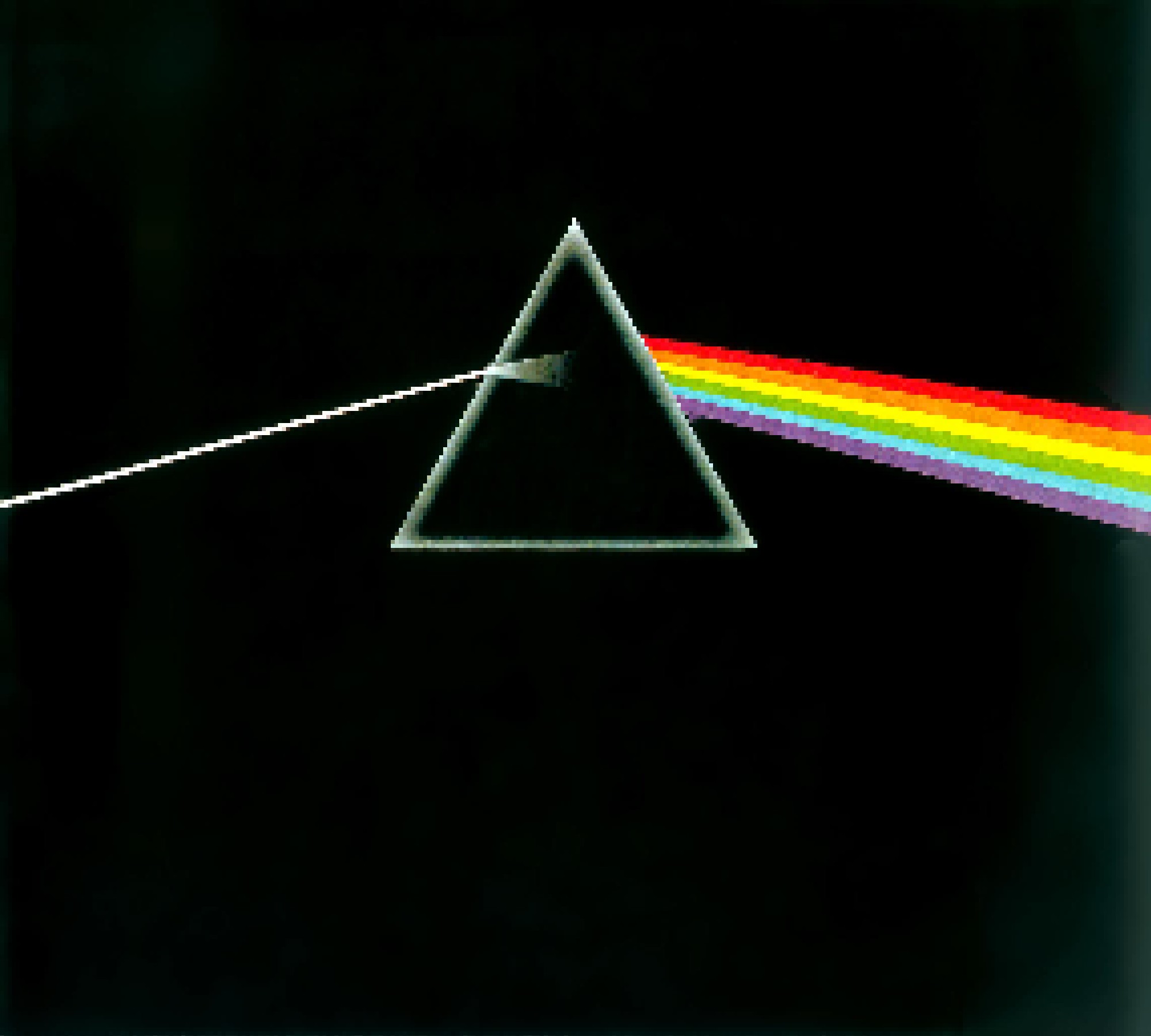
It’s now just over 50 years since Pink Floyd released their seminal album Dark Side of the Moon and as I write this I am listening to the latest re-mastered edition as I’m also celebrating an anniversary – a 15th.


Speak to me
Every January, I remember how lucky I am to be here. In the UK, people are advised to follow the FAST (Face, Arms, Speech, Time) model for reacting to what they may believe to be a stroke in someone else. Fifteen years ago, on a cold winter’s January evening in Tokyo, I was suffering from a heavy cold and my partner had already told me that my ‘face looked funny’, which I thought it had for the previous 50+ years so nothing new there. But when I lurched against her on the sofa, she began to suspect something was wrong. I don’t remember if I said anything but if I did, I was probably pretty incoherent. However, I do have this image of the face of the Joker staring at me from the TV screen as we were watching the Dark Knight Batman movie at the time. And it was no joke as it turned into a very dark night for me with my partner summoning an ambulance.
Breathe
My heavy cold meant that I was bunged up and not breathing that easily so it was a great relief when the white-helmeted paramedics clamped an oxygen mask over my face. I vaguely remember being lifted up from the floor, which is where I had ended up, and being carried out of the house into the waiting ambulance thinking that we might have to postpone our plans for a big shopping trip the next day, a public holiday in Japan.
On the run
Although I speak Japanese, I am by no means fluent, especially in the state that I was in at the time. But, in the back of the ambulance, I recall a lot of chatter as the crew were trying to locate the nearest Emergency Ward capable of admitting the foreigner with the funny face. And to the sound of sirens, it all went very fuzzy.
Time.
The fourth word in the four-letter acronym indicates that time is of the essence when responding to and treating suspected stroke cases. Tissue Plasmimogen Activator (TPA) is a protein involved in the breakdown of blood clots. As long as it is administered within the Golden Hour of the onset of stroke symptoms it can improve the stroke outcome. So, I was most fortunate that on arriving at the A&E of the Toho University Hospital in Ohashi, Shibuya ward, I was thrombolysed as well as being connected to various tubes and devices. Our neighbour, Tim, who’d followed the ambulance to support my partner in her hour of need said that so rapid was the effect of the TPA in clearing the blockage, that I acknowledged him as I was wheeled towards the Intensive Care Unit, although I don’t remember that.
Great Gig in the Sky
But I do remember Tim and Carol being two of my first visitors in ICU where I was connected to the machines that went ‘ping!’ as I gradually became aware of what had happened to me. A whole series of doctors and nurses asked me numerous questions and had me performing simple tasks like raising my arms in a banzai salute. Simple? But not when only my right arm would go up. And the lovely nurses who asked me to squeeze their hands with my left. Administering angels, so maybe I was in heaven after all? But not for long as the reality was that a blockage in my carotid artery had led to a serious ischemic stroke leaving my left side paralysed, so when a senior official from my office called on me, interrupting his own birthday celebrations, he must have had a wry smile when I apologised for having to take a couple of days off work. Those days would become weeks and the weeks would stretch into a couple of months as the long road to recovery started.
Money
Just at the time when I least needed to worry about the practical and financial aspects of my incapacitation of course I was getting extremely anxious about my future and the career implications, especially during the first four weeks of lying in a hospital bed being closely monitored in case of relapse. As an employee of the British Government, I was covered by the NHS which meant that I could take 6 months sick leave before going on to half pay, but what about the longer-term future? Would I be ‘sent home’ from Tokyo to London? Where would I go if I were sent home? Could I travel? Could I work? Could I walk even? A lot was going to be up to me.
Us and Them
But I had a lot of support and help. With access to email and an international phone card I was able to keep in close contact with my family back in England. My sister, an NHS nurse and my son, a first-year medical student had a professional interest in the treatment I was receiving and would often comment ‘You wouldn’t get this in the NHS’. Friends and colleagues in the Embassy visited regularly to remind me that my recovery was more important than worrying about work. Ironically the latter would have involved organising an official visit by the UK Secretary of State for Health to Japan. My team gracefully declined my suggestion that he bring grapes to my bedside but Alan Johnson’s memoirs are still on my ‘to read list’ not just because I admire him as a politician but also because I’m curious to learn whether the Honourable member gave me a honourable mention. My partner visited on a daily basis rushing to get to the hospital during visiting hours after her own busy day at work.
Then there was the medical team at the hospital from the neurosurgeon consultant, who was keen to carry out tests to determine the cause of my stroke, to the head physiotherapist who would put me through my paces to get me walking and using my left arm again. I soon discovered that we had a mutual interest in rock music, so instructions to ‘push, stretch & lift’ etc., were punctuated by the names of our favourite bands. And the nurses with whom I would flirt and joke extending our mutual vocabulary of each other’s language, ‘Poo’ & ‘pee’ proving that an interest in bodily functions extends to the nursing profession worldwide.
Any colour you like
After a month, I was discharged from the hospital for another six weeks of physical and occupational therapy at the Hatsudai Rehabilitation Hospital. The main purpose of this phase of my recovery was to prepare for ‘normal life’ again. Although it was a hospital with ward-type beds we had to get dressed into our normal clothes, and take our meals in a dining room with our fellow patients. I was paired with Nagai-san and Honda-san, who started by complimenting me both on my Japanese and use of chopsticks. But being right-handed meant that I found eating the Asian way easier than trying to co-ordinate a knife and fork but I did not tell my new friends that, formed a good friendship, and I’m still in touch with the latter after all these years. The physical rehabilitation was a mixture of gym work and strength and flexibility exercises to build up strength and stamina. I was also allowed outside for a daily walk with one of the care workers monitoring my physical progress as well as my attentiveness when crossing busy roads. These walks got longer over the weeks and I was encouraged to remember the different routes they took me to get the memory cells functioning again. Memory and number/word association tests formed a large part of the occupational therapy which for me had the additional challenge of being in Japanese. The weather was getting warmer and as the cherry-blossom started to emerge, I was told that I had ‘graduated’ and could be let loose on the outside world again. The cherry blossom season is short-lived and soon those pretty pink petals begin to fall reminding us how tenuous our hold on life really is, as if I needed reminding.
Brain damage
During rehabilitation, we were encouraged to set some personal goals. My son and daughter had retained faith in their old man by going ahead with their plans to visit me during the UK academic Easter holidays. So my goal was to be fully resurrected to go to meet them at the airport for two weeks quality family time. Which I did.
The recovery though was an ongoing process, with follow-up physio and clinical tests to get to the heart of my stroke. And get to the heart they did with a trans-oesophageal endoscopy examination, which involved putting a camera down my throat to examine the heart from behind. Fortunately, this was carried out under sedation so the process was not as difficult as spelling it. With an ultrasound scan of my carotid artery and series of brain scans which revealed the extent of the damage caused when the blockage (now cleared) in the artery had caused the original stroke my very friendly cardiologist declared ‘The exact cause of your stroke will remain a mystery. Don’t work long hours and avoid mental stress. Look after yourself!’
Eclipse
If anything, the mental stress (the unseen damage) was more difficult to handle than the physical recovery. I suffered, and still do, from over-anxiety and loss of confidence prone to tearfulness as I was unable to perform at the high standards I’d previously set myself. So, I applied for an early retirement package, married my partner who’d saved my life, and retrained as a coach and teacher of English to adults, and remained in Japan working as a freelance business communications skills trainer and English writing consultant managing my own time and workload. I’ve renounced alcohol, try to follow a healthy diet and exercise regularly and am looking forward to many more such years ahead of me indulging in my love of extensive and eclectic reading as well as listening to progressive rock music such as Pink Floyd.
But then Covid happened. I was very lucky that in ultra-cautious Japan where mask-wearing is common in any case and most people avoid physical contact, infection, and subsequent death rates were lower than in many other countries especially as working from home quickly became the norm and previously overcrowded commuter trains soon resembled ghost trains, But it took its toll as the demand for training soon dropped off and I found myself, in my early 60s, unable to find new work. So, in trying to turn an obstacle into an opportunity, I decided to focus more on my own writing and took to the streets – keeping physically active discovering little used routes through parks and alongside rivers thus observing strict social distancing. Dark days indeed but whilst looking inwards to my own dark side, it was soon time to seek the light and maybe, just maybe, use the extra time given to me to start work on that childhood ambition to write a novel, or at least a fictionalised version of my memoirs whilst I could still remember.
That’s where I am now, four years after the onset of Covid. I’ve been lucky but, at times when life seems grim, just have to remind myself to:
Shine on you Crazy Diamond
(from Pink Floyd’s follow up album ‘Wish You were Here’ and my favourite track of all times. Therefore this is the long version – most will want to skip!)
This blog is dedicated to fellow Stroke Survivors and Floydies wherever you are




















 Albihon