Tag: Leicester

Imagine

Imagine being back in Tokyo in the early 1980s when I lived there on my first overseas experience and the start of, for me, a long relationship with Japan. It was 8 December 1980 and as a member of the Japan -British Society, I had the unenviable task of being Santa at the Junior Group’s Christmas party, dressed for the occasion of course. Fortunately, I don’t have any photographic evidence of the event. After the formal events of the evening had ended, and I’d performed my duties of handing out presents, a group of us continued the seasonal festivities by heading off to the nearest disco in Roppongi, the centre of Tokyo’s nightlife in those days, and may still be today but I’m too old for that sort of thing now.

But I wasn’t then and can remember grooving with the daughter of the Military Attache at the American Embassy when she shouted in my ear (the music was VERY loud) ‘DO YOU KNOW JOHN LENNON?’ to which I replied ‘Not personally, but of course I know of him’. ‘Well, he’s been shot’. Shocked, if it were true, all thoughts of this developing into a romantic encounter of the dance-floor came to an end, and the music suddenly stopped as the official announcement was made, and reality sunk in. The evening obviously then took on a more sombre tone as the DJs tried to keep it going amongst the tears with a tribute to both John’s solo work as well as that of the Beatles.

I was never a real Beatles’ fan per se but, being a child of the 60s, I grew up with them, if not literally but with the extremely important influence they had on the music of the time and especially the amazing catalogue of songs written by Lennon and McCartney which continue to permeate the music scene of all genres more than 50 years after the group broke up. My musical tastes were less pop and more progressive rock especially of the concept albums of the likes of Yes, Genesis, Emerson Lake & Palmer and Pink Floyd. However, it is said that the Beatles’ album Sgt Pepper’s Lonely Heart Club Band was one of rock’s first commercially successful concept albums.

Did I mention Pink Floyd? Of course I did (https://jeremyjlhill.com/2024/01/11/dark-side/)and I did see them live in Wembley stadium in 1988, post- Roger Waters although I have since seen him perform twice in Seoul and London. But with their own following and several extremely good tribute bands keeping their music alive, one is never far from a feast of Floyd. My first time having to wear a face-mask in public at the onset of Covid in Japan was at a BritFloyd concert in Tokyo, as this new virus was starting to have an impact.


And more recently the UK Pink Floyd Experience in Leicester, England accompanied by my son, Justin (also a fan) and his partner, Kerrie (she soon will be).


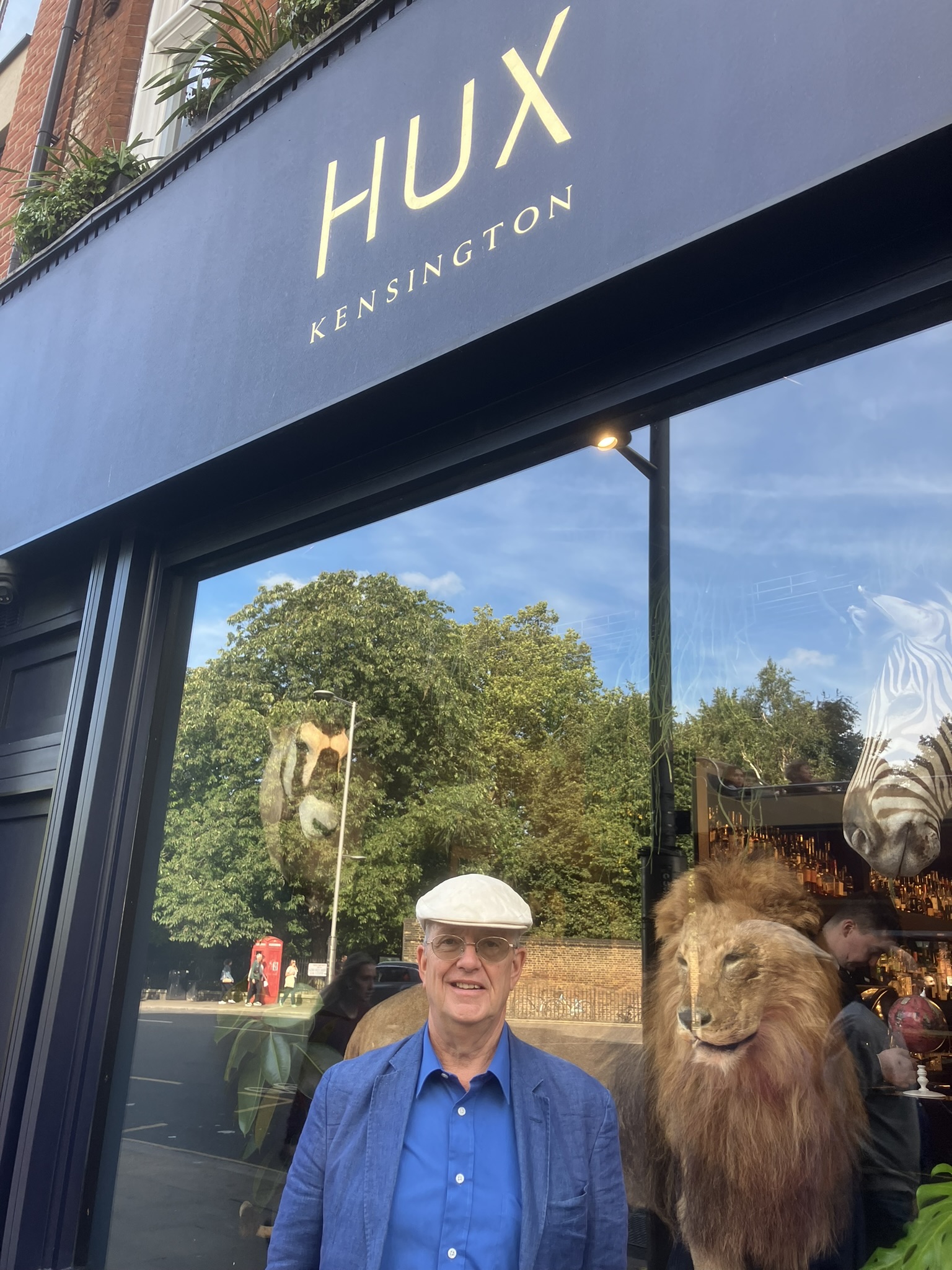
But I digress – or do I? I am privileged to have got to know a few members of Japan’s own Pink Floyd tribute band (Genshi Shinbo or PinkFloyd Trips) including multi-talented singer/musician Kenneth Andrew and guitarist/bassplayer Yutaro Ogida. Yutaro, who did his high school education in the UK, also has a solo career and I was lucky that my time in England this year coincided with his European tour, so we were able to meet up in London after his performance in the rather wacky Hux Hotel in the definitely not wacky district of Kensington.


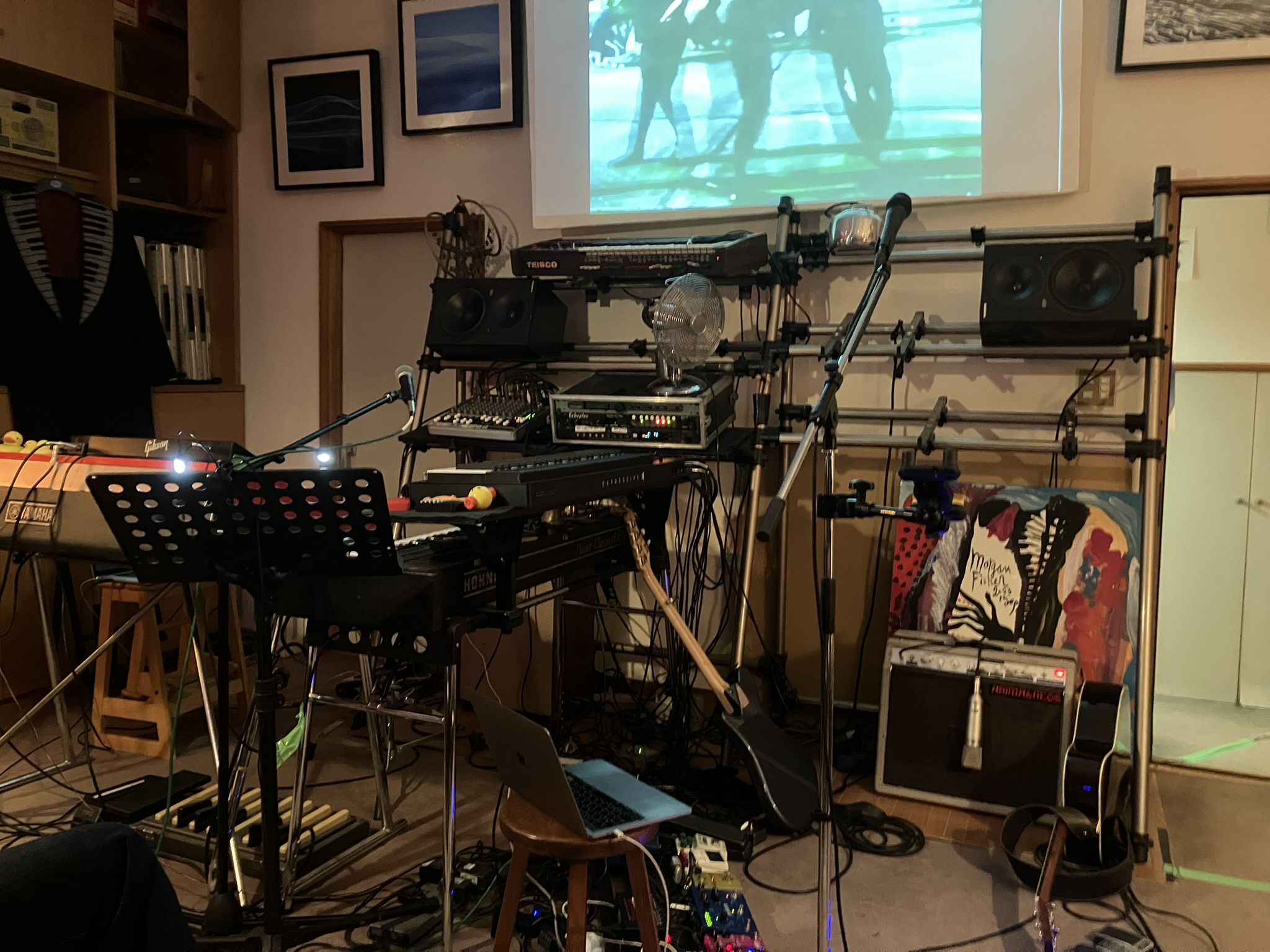
To add to Yutaro’s eclectic portfolio of work, I was very happy to receive an invitation last weekend to attend an evening’s tribute to John Lennon, 44 years after the great man was taken from us by the cruel hand of Mark David Chapman. Teaming up with Morgan Fisher, a British keyboard player and singer from the band Mott the Hoople and who has also has made his home in Japan, they put together a very intimate performance of songs and words in Morgan’s salon offering their guests and friends wine, tea and snacks to keep us going through three hours of musical memories.
But with just two weeks to go before Christmas, it would be remiss of me not to wish you all, along with John and Yoko, a very, very…

I doubt whether the War is Over, but let’s hope that somewhere, we really can Give Peace a Chance.


Thank you, John and Merry Christmas wherever you are!

Happy St Edmund’s Day!

‘Saint Who?’
‘Saint Edmund, the true patron saint of England!’
‘But isn’t St George…?’
‘Yes, I know, you’re getting confused with that foreign usurper, supposed slayer of a dragon, chosen by King Edward III (1312- 1377) to be England’s Patron Saint and protector of Life for those of the Christian faith. But, 500 years before that in the Kingdom of East Anglia…’

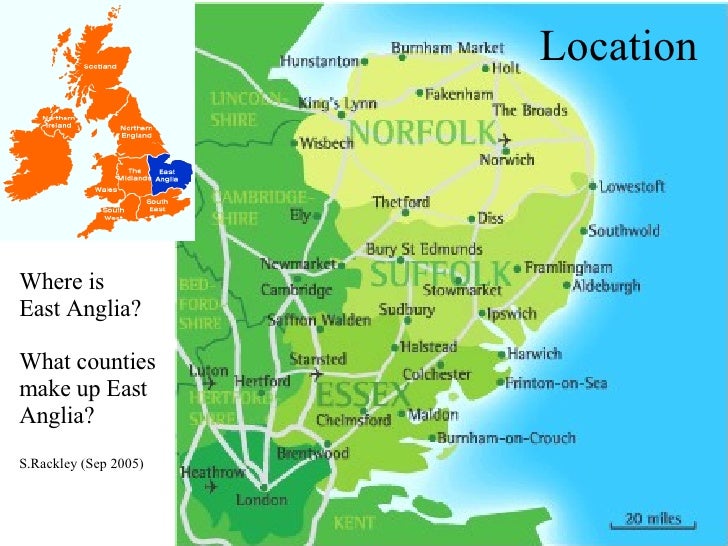
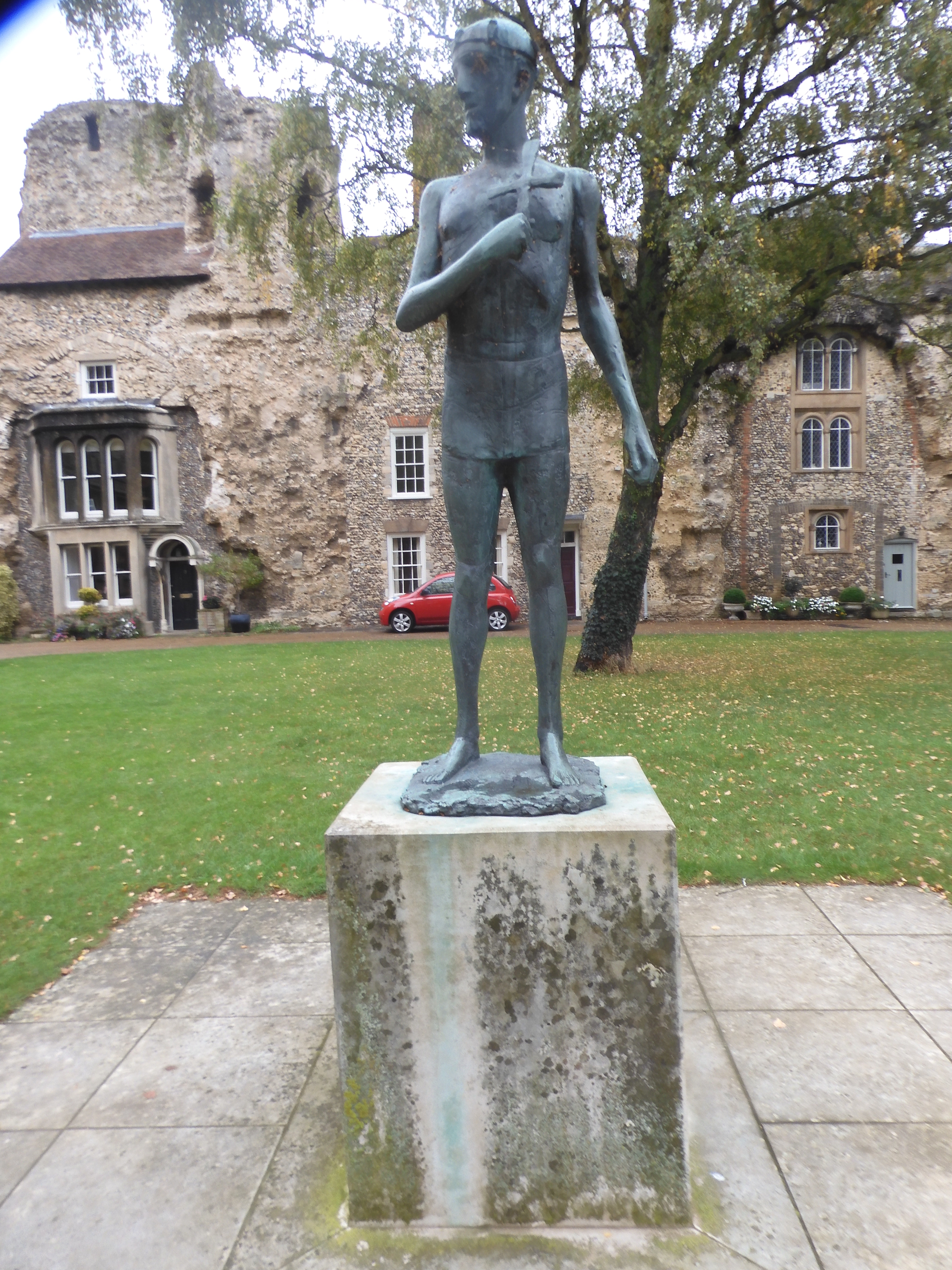
Young Edmund of Saxony was nominated by the dying King Offa of Anglia as the heir to his throne and was crowned King on Christmas Day 855. But it wasn’t a peaceful reign as the Anglo-Saxon Christian region was frequently attacked by invading pagans from Denmark, doing what Vikings do bringing mayhem to the region. Whilst King Edmund did his best to negotiate a peaceful end to the conflict, the Danes weren’t interested and were intent on violence. In 869 in a final battle during which Edmund’s troops were defeated, he was captured and was told to renounce his Christian faith. Refusing to do so, he was tied to a tree and shot full of arrows, and still he resisted. The Danes brought an end to his stubbornness by decapitating him and throwing his head into the woods, believing that once a head is severed from a body that person can then not proceed to an afterlife.

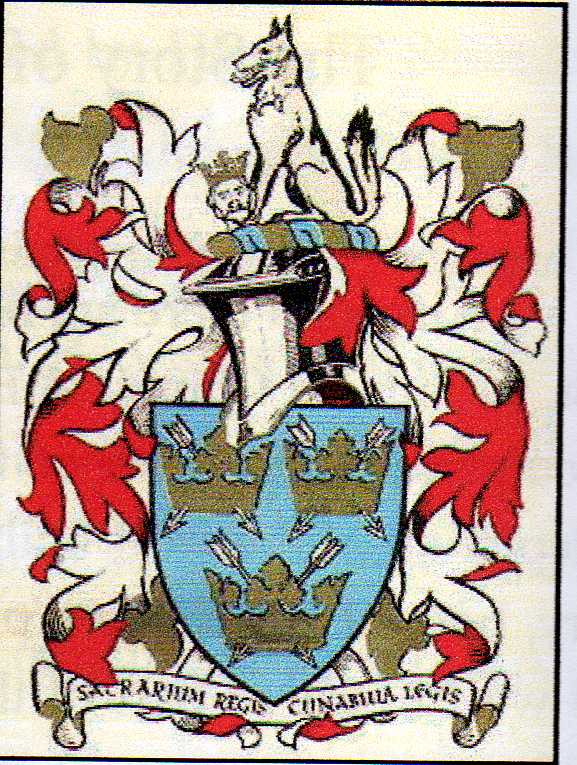
Here the legends surrounding Edmund’s life and death begin. His followers, looking for his head, heard his voice calling ‘here, here’ and found it under the protection of a wolf. And so, his body parts were re-united and the miracles started as subsequent examination of his corpse found that his head had re-attached itself to his body with only a thin red-line as evidence of his decapitation. History is rather vague as to exactly what happened to his body although several miracles are associated with it leading to his canonisation as a Saint on its journey to London and even possibly to France. However, the preferred location for its final resting place was in the Abbey of Beodricsworthe in Suffolk, subsequently known as Bury St Edmunds. That is my very simplified retelling of the tale of St Edmund who was then recognised as the Patron Saint of England, his Saint’s Day being 20 November, the date of his death in the year 869. A much more detailed and academic account can be found in learned historian Francis Young’s book ‘Edmund. In Search of England’s Lost King’.

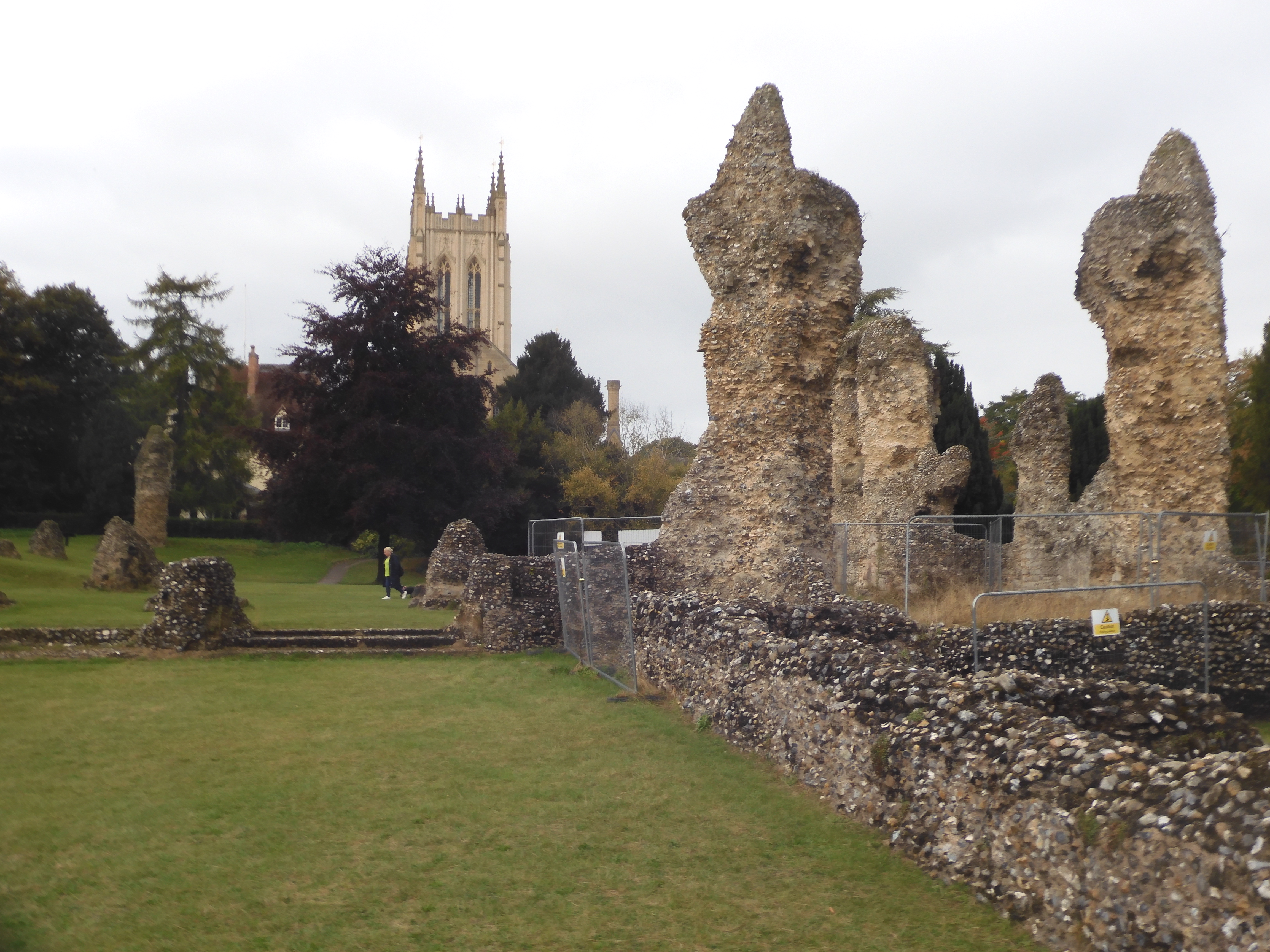
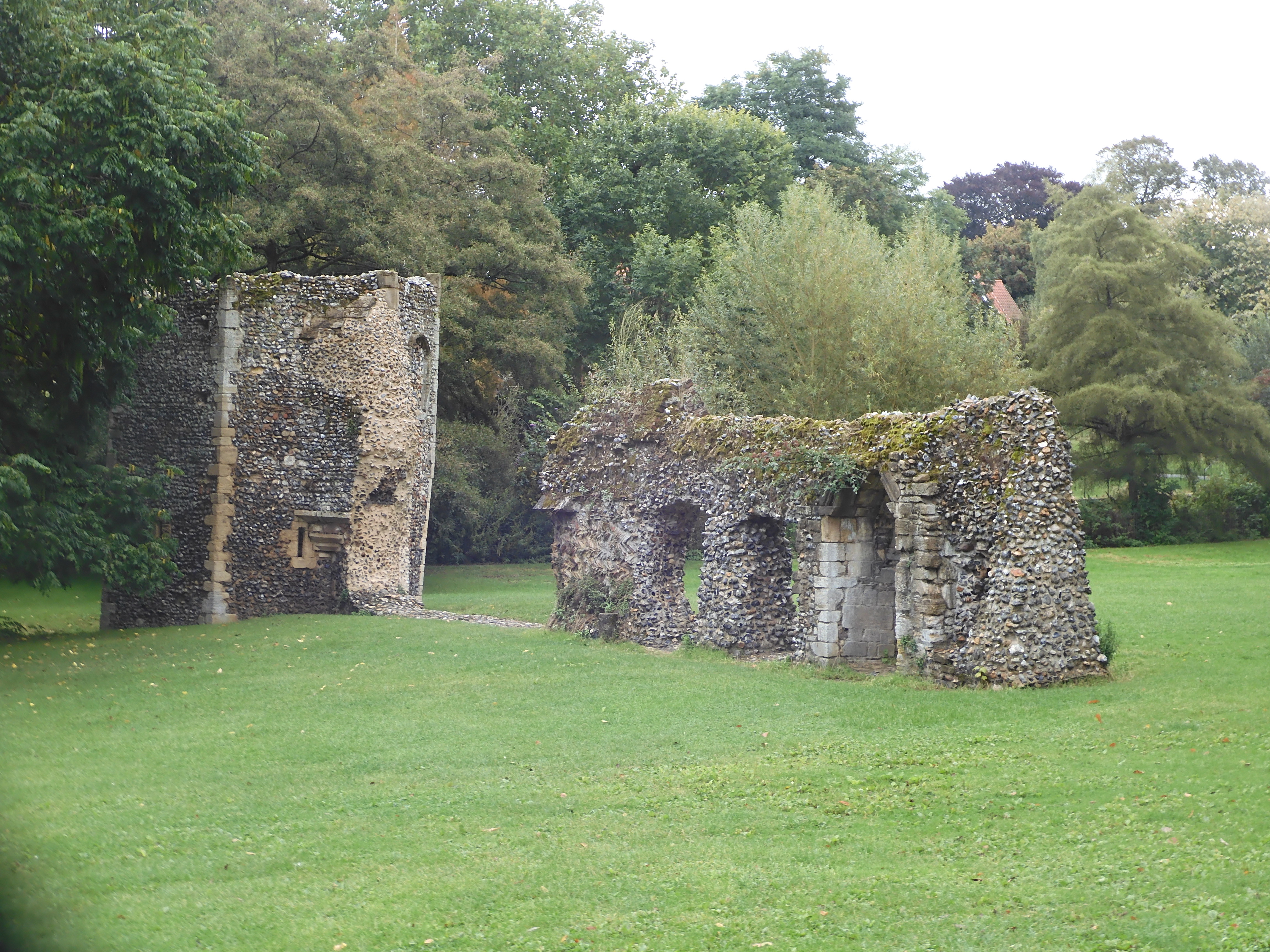
I agree with Young’s statement that ‘many people who do not see themselves as religious…identify strongly with regional and national patron saints’ especially ‘Edmund, the quintessentially English saint’. During my teenage years I lived close to and undertook my secondary (high school) education in Bury St Edmunds, so the town and the legend from whom it got its name was an important part of my life especially in 1969/70. My route to school involved a walk through the Abbey Gardens past the ruins of the old St Edmunds’ Benedictine Abbey founded in 1020 and one of the last to be destroyed during King Henry VIII’s dissolution of the monasteries. However, what is left does today give a good impression of what this mighty edifice might have looked like originally.

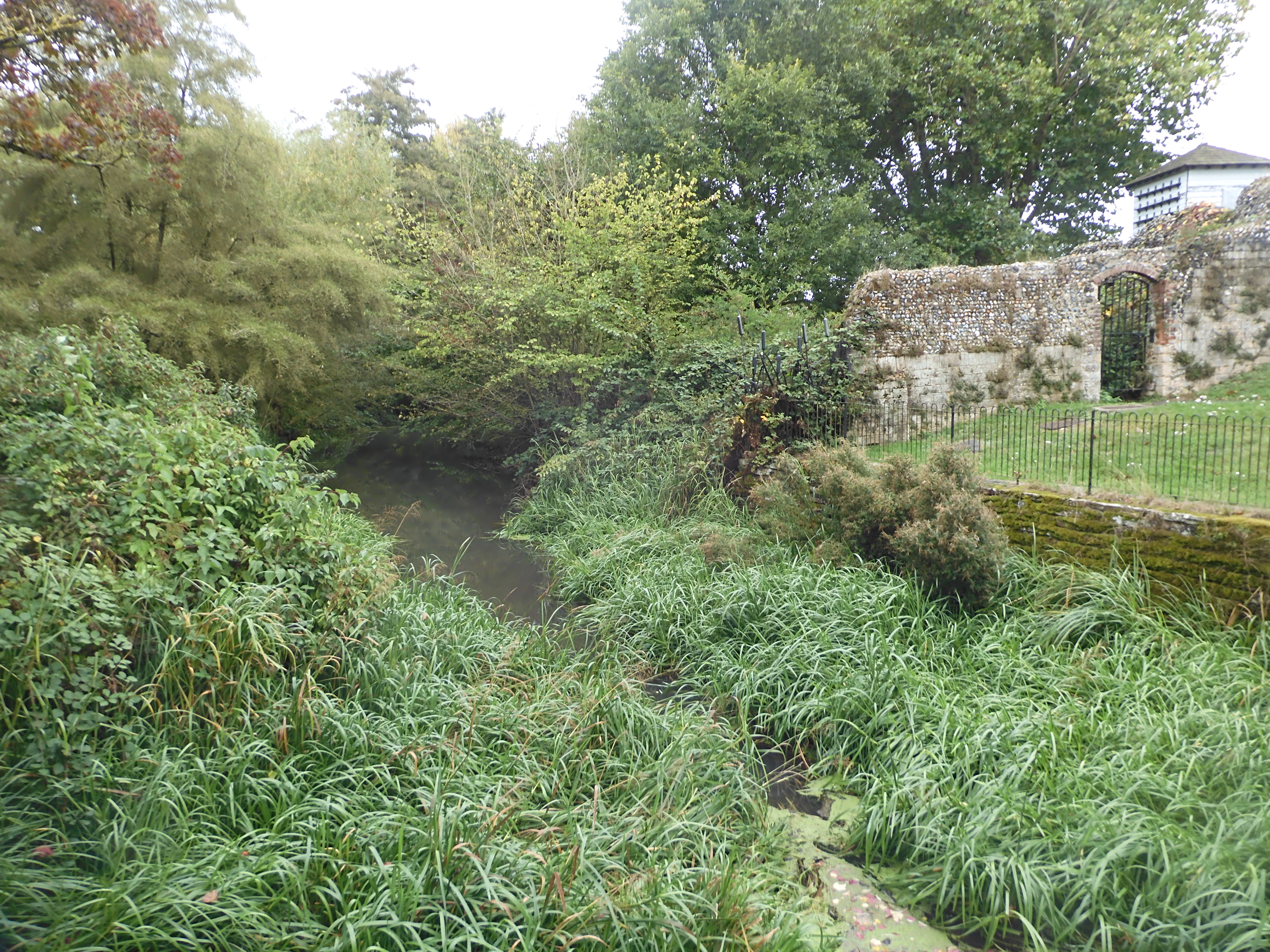
A couple of months ago, my sister and I revisited the area and revived many memories of our life and schooling 50 years previously; I recreated that walk through the Abbey gateway and gardens down towards the River Lark which I had to cross to get up to my school.

Walking through it again also reminded me of a role I played during those years. In 1970, to mark the 1100th anniversary of King Edmund’s death on 20 November 969, and his martyrdom the following year, the town put on a Pageant, Edmund of Anglia. The highlight of this was a dramatization of Edmund’s coronation, resistance of the Danish invaders, capture, and execution. Using the Abbey Ruins as the backdrop, the production, written and directed by Olga Ironside-Wood, and drawing on local talent of actors, musicians, dancers, and an Alsatian dog (!) was a show by the people of East Anglia, about the people of East Anglia and for the people of East Anglia. Not quite so talented perhaps were those chosen to play the part of the Saxons and Vikings in the final battle of Bury. We teenage schoolboys from the King Edward VI Grammar School, the building of which overlooked the grounds of the Abbey, were the brave defenders. However, the Danish invaders were played by servicemen from the nearby United States Airforce base. We didn’t stand a chance as blood and gore was shed on the banks of the River Lark.

One evening the show was graced by the presence of the then current Prince of Denmark. At that time, I was participating in the Observer newspaper’s Young Reporter of the Year competition, with the pageant being my subject, and Ms Ironside-Wood had kindly arranged for me to speak to the Prince. When I asked him whether they had the story in Denmark, he replied “Yes, but our version is slightly different!” A diplomatic Dane indeed and his remarks were included in my report as I cut my teeth on my non-fiction writing activities.

The production was filmed and a 30-minute archive footage is still available to watch today, which can be viewed by clicking on the following link, opening the new tab and typing in ‘Edmund of Anglia 1970’

Whilst the story of St Edmund is a mix of proven history, local myth and rumour the big question remains. Where is Edmund buried? Some believe he may, appropriately, have been buried in the former monastery’s cemetery under the site of the current tennis courts. But, unlike in the case of King Richard III in Leicester, excavation works have yet to take place find yet another of England’s lost Kings. https://wordpress.com/post/jeremyjlhill.com/1114

But should it come to pass that he is discovered and identified, it would give further weight to the campaign by the people of East Anglia to have him re-instated as England’s Patron Saint. So who would you go for? The Middle Eastern mercenary who saved a princess from the jaws of a dragon, which might be favoured by the romantics? Or, in the words of Francis Young ‘No saint in English history lends himself to secular re-invention more readily than Edmund, the King who died for his people’. Let all the English everywhere remember, your Patron Saint is St Edmund the Martyr; honour him on the 20th November. Your flag is not the Red Cross but the White Dragon, well known to Alfred the Great, Knut the Great and King Harold the Second.

I know who gets my vote.

And I shall probably mark my hero’s day while listening to the 2015 song ‘Barbarian’ by Suffolk rock band The Darkness in which he gets a mention:

WARNING:-GRAPHIC AND VERY LOUD

HAPPY ST EDMUND’S DAY to you all!